
Recycling household waste remains an essential way to practice sustainable living, but there are some eco-friendly challenges we should be aware of.
In terms of taking individual climate action; incorporating recycling into routine practices can fulfil a significant role in helping to address climate change, and better protect the planet. Recycling is great for reducing household waste and limiting what ends up in landfills, as well as conserving valuable natural resources by diminishing the need for raw materials. It also promotes personal habits that focus on sustainable consumer patterns; something that moves us away from relying on single-use items and instead choosing products made from materials that can be recycled.
By engaging with environmental responsibility, recycling provides a tangible and highly effective way for individuals, communities, and countries around the globe to meaningfully contribute to positive environmental conservation. Being personally invested in building a resilient planet is how we work to secure a renewable and thriving future—for us all.

This post is part of the Climate Change Collective, a group of environmentally-minded bloggers who share valuable climate action news. Started by Michelle from Boomer Eco Crusader and Jamie from Jamie Ad Stories, each month a different member contributes a lead/focus post that the rest of the collective responds to on their own sites, further discussing the information and issues raised.
The collective is currently open to any other bloggers who want to join; if you are interested, get in touch.
Collective Climate Action
The most recent lead/focus post for the collective was written by Jamie from Jamie Ad Stories, where he shares some alternatives to using wrapping paper for gifts, especially when much of what is available is not actually recyclable. This includes anything with glitter, foil, artificial textures, lamination, or other plastic elements or coating.
If landfill sites are being filled with gift wrapping every Christmas, then we really need to challenge this. In the spirit of Christmas, should we not be giving back to the planet instead of polluting it with rubbish? | Wrapping Up Doesn’t Have To Be A Waste – Jamie Ad Stories
As Jamie mentions, the UK alone uses approximately 227,000 miles of gift wrap each year, highlighting why it’s such a significant issue. And with many other countries producing similar amounts (or more) of this type of waste, it becomes evident that urgent action should be undertaken. Examining the statistics for the United States, for example, reveals that of the approximately 4.6 million pounds (in weight) of wrapping paper produced annually, half of it ends up in landfill sites—posing a substantial problem. Globally, landfills represent the third-largest source of climate-warming methane emissions. Simply put, the more that ends up in these sites, the more damage we are doing to our planet.
With all this in mind, it’s probably a good time to examine the potential obstacles and issues associated with recycling …

What You Need To Know About Recycling
Being knowledgeable about the issues and problems with recycling is crucial for ensuring that environmental sustainability practices are effective and achieve what they are supposed to. Recycling reduces waste, conserves resources, and takes valuable steps towards decreasing pollution. However, it’s equally important we understand that challenges and problems with recycling exist. If we focus on being well-informed, we empower ourselves as well as our communities to foster a more responsible and effective approach to household waste management.
While complications with recycling can vary depending on regions and the technologies being used, here are five significant (and common) issues that interfere with the effectiveness of recycling:
Insufficient Awareness of the Best Recycling Practices
While recycling is undeniably beneficial, its effectiveness is compromised when there is a general lack of education about proper recycling practices. Making matters more confusing and potentially problematic is the fact that recycling waste management guidelines can vary from one area to another within a specific region. If municipalities or companies running recycling programs have not successfully conducted widespread awareness campaigns, residents may remain unclear about what can and cannot be collected or even that these services exist.
To overcome this we can:
- Research local recycling guidelines, attend community workshops, or engage with local environmental organizations.
- Connect with neighbours and share information through social media platforms to help label recycling bins clearly, encourage proper disposal, and advocate for sustainable practices to foster a community-wide commitment to environmental responsibility.
Contamination With Unwanted And Non-Recyclable Materials
Unfortunately, waste collected for recycling can still end up in landfills due to contamination. The presence of non-recyclable materials and/or improperly sorted or cleaned items can disrupt the entire process. While some recycling plants have the technology, time, and workforce to check and remove contaminating items, many are unable to do so. In these cases, if a product or material compromises their ability to recycle, the entire collection is often sent to a landfill. Contaminants can also damage recycling equipment, increase processing costs, and compromise the quality of recycled products.
To overcome this we can:
- Check local guidelines to ensure we know what household waste can be recycled and understand how it will be collected, including whether items need to be separated and washed or rinsed.
- Understand product and material labeling to ensure that items are recyclable.
- Stop ‘wishcycling’—the practice of tossing something into the recycling bin with the hope it will be recycled, even though we know it’s probably unlikely.
Recycling Waste Being Exported to Other Countries
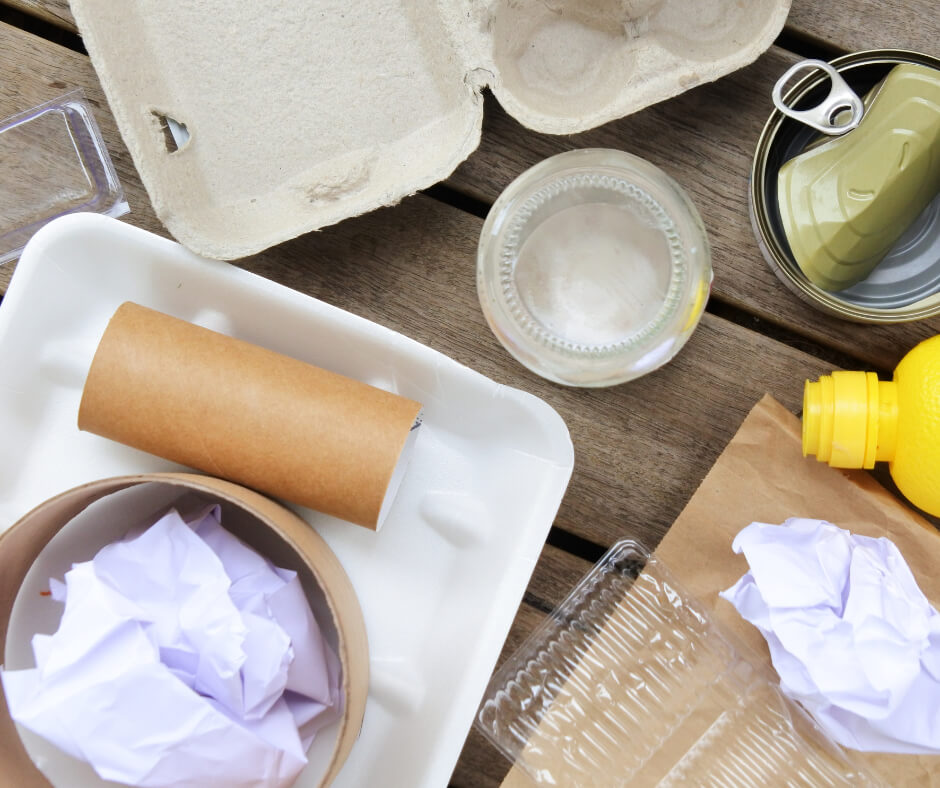
Many wealthy nations export their recyclable waste to developing countries for disposal because it can be cheaper to send it abroad—where labour and environmental regulations may be less stringent—than investing in local recycling initiatives. This practice also allows local and/or national governments to claim they have met recycling goals or reduced landfill usage, although the reality is that they merely shifted the issue abroad.
Exporting recycling waste in this manner raises some serious environmental and ethical concerns, particularly as it perpetuates a global imbalance in waste management that burdens less affluent nations. Limited infrastructure, inadequate recycling facilities, and insufficient resources make it challenging to manage and process the volume of incoming waste. This can lead to improper disposal practices, causing pollution and health hazards for workers and local communities, thereby exacerbating environmental and social inequalities.
To overcome this we can:
- Support or lobby for legislation that restricts or prohibits the export of certain types of waste. Engage with local representatives to express concerns and push for regulatory changes.
- Take part in public consultations, hearings, and comment periods related to waste management policies. Make our voice heard during the decision-making process.
- Collaborate with environmental NGOs advocating for sustainable waste management policies. Leverage their expertise and networks to amplify the message.
Overlooking the Damage of Resource-Intensive Recycling Processes
While recycling is undeniably a crucial part of sustainability, it can be resource-intensive and have negative environmental implications. Collection, transportation, and processing all demand energy that contributes to carbon emissions. Additionally, some types of recycling involve chemicals or water and land usage that becomes harmful; it’s essential a comprehensive approach is adopted to mitigate any environmental costs.
To overcome this we can:
- Find out what our local or national recycling regulations are and how adherence to environmental standards is being met and monitored.
- Encourage local government and businesses to invest in technologies and collection systems that reduce transportation-related energy consumption and emissions.
Disinterest and Apathy About the Benefits of Recycling
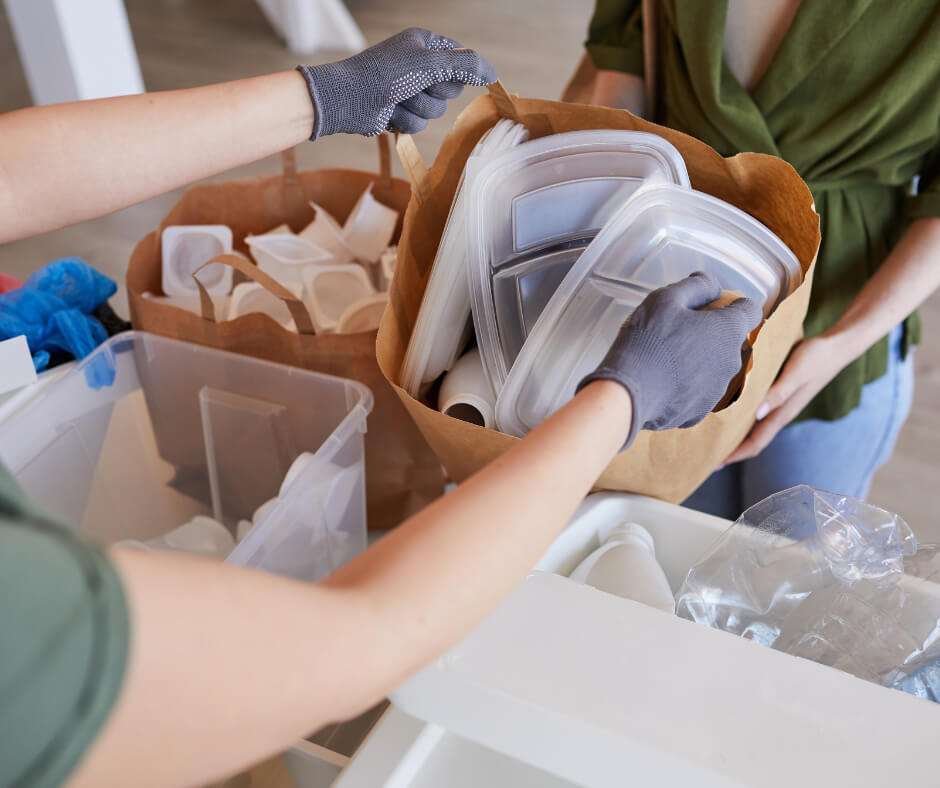
Believing that our individual choices and actions make no difference or that the environment can survive without careful decisions about recycling is far more prevalent than it should be. The truth is that while personal responsibility will not instantly heal the planet, and the results of our endeavors may seem futile given the enormity of the climate issues, what we do matters because our effectiveness lies within our collaborative and collective power.
Indifference towards recycling exacerbates environmental problems, leading to resource depletion, pollution, increased waste, and a negative impact on ecosystems and the climate. Active participation in recycling is essential for addressing these environmental challenges and fostering a more sustainable future.
To overcome this we can:
- Set some personal recycling goals and reward ourselves when they have become a part of our everyday routine. If possible, gradually increase or expand on what we are doing so we maintain a sense of achievement and purpose.
- Share the recycling tips and best practices that we find effective and helpful; sometimes motivating others inspires us to keep going.
In Summary
As accessibility to recycling services varies for individuals, the most valuable step we can take is to remain committed to doing what we can, no matter how small, and finding ways to integrate it into our individual climate action. If recycling is not feasible at home, we can make use of or help implement recycling practices at work, educational facilities, or local businesses.
Despite the challenges that recycling may encounter, it is still worth investing time and effort in. Staying well-informed and sharing relevant information to encourage others to recycle is how we can make it a more efficient and effective part of sustainable living. Are there improvements that could still be made? Yes, of course, but we will not get anywhere if we do not try.
How does your local community support and promote recycling? What recycling tips can you share?
Further Info:
For U.S. customers, check out the Green Field Paper Company which makes and sells 100% recycled and 100% recyclable wrapping paper (and many other products).
 transatlantic | notes
We’re very fortunate that our community has an excellent recycling program. In fact, the blue recycle bin was pioneered here over 40 years ago.
In Ontario, the provincial government is taking over responsibility for recycling. In theory, this should standardize recycling systems across the province, expand the number of items accepted for recycling, and shift the responsibility back to the companies that produce the waste. I say “in theory” because I don’t trust our current government to do anything right when it comes to environmental programs. Time will tell. The province of British Columbia has a similar program to the one proposed in Ontario and it seems to work well. The new program is coming to my community later this year. We’ll see what happens.
Thanks for this thoughtful post, Molly, and for being part of our Climate Change Collective.
It’s great when local governments take this seriously and try to make it as accessible and wide ranging as possible. It’s a shame that this often gets disrupted in some way and makes for a bit of confusion. The recycling in my area is very hit and miss, and the new apartment complex I live in does not have recycling bins/collection—so it has to be an individual effort. I hope recycling becomes much more prevalent everywhere—fingers crossed!
Thank you for sharing some knowledge about recycling. I gained new knowledge from reading this post.
I am so thankful this was useful and gave an insight into recycling for you!
Where I live, we have a system in terms of different recycling bags/bins for different items ie paper, cardboard, bottles, plastic etc. It’s important to recycle properly to make sure that we’re making a difference! x
Lucy
It’s great to have the recycling infrastructure in place, it certainly makes it easier to get people on board with doing it!
We nearly recycle in my country. Just the other day one started a recycling trash collection drive. Where they leave selected bins in populated areas for people to dispose of. I think it was a good try but it’s not regulated regularly and the bins tend to be overflowed with plastic items. But I am hoping in the future someone will start a recycling plant and we could do it more often.
It’s definitely a start, and it can/should only get better from there (hopefully). At least there is some willingness to give it a try—which helps brings the issue to many people.
So many important things here to consider: the concept of “out-sourcing” our waste to impoverished countries is shameful!
It really is, especially as those countries sending their waste abroad probably know that recycling infrastructure is not so readily available where they are sending it.
Awesome post, Molly! It’s my first time hearing ‘wishcycling’ and I’m going to start using it whenever I see it happening. Contamination is a huge problem and it’s important to refer to our city’s website to see the proper way to recycle. It may take some effort, such as sorting or making sure our items are clean and dry, but it’s important if we want it done properly. Thank you for sharing!
I know so many people who wishcycle and just throw things in hoping it will be alright, which then contaminates the whole collection (which them ends up in landfill). Hopefully, this post will help people realize that they have to stop doing this!
It really annoys me how many people don’t actually recycle properly! While living in my uni house, I constantly had to fish out things that couldn’t be recycled or hadn’t been cleaned properly. It is a big issue, that I think more education needs to be dedicated too. Really great post Molly x
It’s a huge problem, and so many people just throw stuff into recycling hoping that it will be okay (which, it isn’t). I hope more people begin to understand that there are things that should, and should not go into our recycling bins!
Well, my city promotes recycling and climate change very heavily because it’s so heavily populated. It’s very unnoticed. You made a lot of excellent points that I considered, especially about the wish-cycling.- Riyah Speaks
It’s so encouraging to hear that there are more and more places that are taking climate change and recycling seriously. Hopefully, this continues and we all become increasingly able to do our bit. Thanks so much for reading!
This post is so inspiring! I think even though I have been taking part in donation camps, I am not doing enough to save the earth. I guess, I will find out the local bodies in my area and connect with them actively to find out how I can help.
All we can do is what we are able to, so don’t be too hard on yourself if you feel you’re not doing enough. You are doing something very worthwhile and that is great!
Thank you for your kind words, Molly. This year I do feel enthusiastic to be doing more for myself. But you are also right coz sometimes when I try to multitask, I end up doing incomplete tasks.
I love that you’re adding to the Climate Change Collective. This is an important topic – we talk about the goods of recycling, but there have to be some flaws. Education is important because some people genuinely do not know the difference between the different types of plastics, or there’s no convenient capacity to just do it. Thanks for sharing these tips and ways to help!
I 100% agree … I think people who are willing to recycle want to do it correctly, but there is still so much that ends up being put in recycling bins that does not belong there. Hopefully, the more information is made available, the more people will understand what can/cannot be recycled.
What an interesting deep dive into the details of recycling! I learned so much from this. Thank you for sharing!
I am so glad that this proved useful and informative!
I have a love-hate relationship with recycling and essentially look at most of my recycling efforts as “wish-cycling” due to many of the reasons you’ve shared. As a renter, I share recycling bins with a lot of other people and see the results of either a lack of education, care, or other circumstance impacting our bins regularly. So much of what is put in there will not get recycled and it is disheartening. But we’ve still got to try!
I am pretty much in the same position and view it in much the same way. We do our bit by trying to physically take things to an actual recycling place, but we can’t do that as regularly as we’d like. I am seeing more options coming in my area (some large grocery stores have recycling buns in their car parks), but it could definitely be better!
ooh great post i decided to stop buying things that come in plastic because it makes me sad seeing how recycling is kind of a lie in my town
It can be very upsetting to see that recycling is not always what it seems in some areas. It’s great that you are taking individual action to combat this!
It saddens me that we have become a throw away society. I would love to see glass make a come back, it also provided more employment opportunities. A lot of businesses are mostly concerned with their bottom line though and plastic seems to be cheaper. I will say, I do a lot of projects with wrapping paper because I cannot seem to part with it, too pretty to end up in the landfill. Thank you for sharing Molly! <3
There is definitely an element of convenience, and money having made things much more with regards to throw away culture. I hope that people continue to make small changes whenever they can!
A couple of years ago, Denmark expanded their recyling program to include plastics, food/drink cartons, and textile waste (we already had glass, metal, paper, and food waste), but there was zero education about what plastics and cartons could be recyled, so people were regularly asking in my city’s Facebook group what can be recycled. They did make an app where you scan the barcode, but the database was limited and it wasn’t always clear on what parts could be recylced. Now, some companys have been including the icon on their packaging for what bin it goes in, which is helpful and takes out the guess work. Also, this week they put signs above the glass recycling containers to not put in porcelian which is definitely wishcycling! So, education is important! I am curious now to look into the recyling program here and to see what Denmark is doing with the recyling wastes and what environmental standards they have.
It sounds like Denmark is really trying to get the hang of this and making recycling as easy to do correctly as possible. Where I live, sadly, most of the recycling just goes to the landfill anyway, and there is not enough education about things in general—although they are trying to become more environmentally responsible. Thanks for sharing the initiatives that are being put in place where you are, it sounds like a lot could be learned from Denmark!