
Explore fun and practical ways to teach children of all ages about reducing plastic waste and inspire them to take simple steps at home and beyond.
Talking to children of all ages about plastic waste, especially from toddler to teenager, is a powerful way to nurture their connection with nature and help them understand the impact of their choices. When they see how plastic pollution affects animals and habitats, they’re more likely to care—and to take action that protects our planet. These eco-friendly conversations at any stage also encourage lifelong sustainable habits, such as using reusable items or recycling properly, that build thoughtful, environmentally aware citizens.
Learning about climate change and its effects on the planet and all its inhabitants—animal, insect, plant, and human alike—can sometimes feel overwhelming. But when children are supported with age-appropriate guidance, it can become an empowering experience. With the right approach, knowledge leads to action—whether at home, in school, or within the wider community—giving children the confidence to take practical steps that make a real difference.
Even though exploring the topic of plastic pollution as part of a broader understanding of climate change can be a little scary, there are ways to make it fun, positive and engaging for children. From beach clean-ups and eco-crafts to reading picture books about ocean animals, there are lots of playful ways to teach about these ideas. Children enjoy feeling helpful, and when they take part in small changes, it boosts their confidence and deepens their care for the environment—a meaningful win for both them and the planet.
This post is part of the Climate Change Collective, a dedicated group of bloggers that tackle environmental and climate-related issues. The lead topic this month, ’How to Face Overwhelming Climate Change Topics Like Plastic’ was written by Alison from A Sustainably Simple Life.
How To Make Learning About Plastic Pollution Less Scary
When teaching children about plastic pollution and reducing plastic waste, it’s important to approach the subject in ways that foster awareness while encouraging positive practices. This section offers some useful tips to help adults guide children towards understanding and caring for the environment with confidence and optimism.
Here are some ways to make teaching about plastic pollution more approachable:
- Use Suitable Language | Explanations should be tailored to a child’s age, stage, or level of understanding, keeping the message simple and clear. Whenever possible, accurate scientific vocabulary should be used—some schools or science curriculum websites may provide helpful word lists.
- Focus on Positive Steps | Learning about an environmental issue should always include practical, sustainable actions that children can take part in. Involve them in simple choices and talk about how these efforts help protect the planet. Use games, crafts, or storytelling to engage children in learning about plastic waste in a playful and enjoyable way.
- Highlight Success Stories | Share examples of how communities, animals, or habitats have improved thanks to conservation efforts to inspire optimism.
- Encourage Questions and Discussions | Create a supportive environment where children feel comfortable asking questions and sharing their thoughts. This helps them process information, express emotions, and develop understanding without feeling overwhelmed.
- Be a Role Model | Demonstrate environmentally friendly habits in everyday life. By modelling simple actions—like bringing reusable bags or avoiding single-use plastics—you show children that positive change is both possible and achievable.
- Balance Facts with Hope | Be honest about the challenges, but always pair facts with hopeful examples of solutions and progress. This helps children stay informed without feeling discouraged.
With the right support, children can grow into thoughtful, environmentally conscious individuals who can build on a solid foundation of curiosity, compassion, and practical knowledge about how to care for the planet—something the world could always use more of.
How To Inspire Kids of All Ages To Reduce Plastic Waste
Although this particular section specifically focuses on plastic pollution, the advice shared here could also be useful when covering other climate-related topics. Following these basic guidelines will provide anyone looking to teach or raise climate-conscious young people with some useful ideas.
Children Aged 2–5 Years
At this stage, children are full of curiosity and eager to make sense of their surroundings. They learn best through stories, sensory play, and simple, relatable ideas that connect to their everyday experiences.
How To Talk About Plastic Pollution:
- Keep it short, simple, and caring with relatable emotional language that focuses on kindness rather than danger: “Plastic can hurt animals. We help by using less and putting it in the bin.”
- Tell stories, not statistics, by using picture books or making up simple stories where animals stay safe because someone picked up litter.
- Talk about helping, not harming, by keeping information about caring and teamwork: “We look after nature by reusing things and picking up rubbish. That keeps the Earth happy.”
Books To Read:
- Little Turtle and the Changing Ocean by Becky Davies
- Rocket Says Clean Up! by Nathan Bryon
- Someone Swallowed Stanley by Sarah Roberts
Activities To Try:
- Sorting (Recycling) Game: Go around your home or classroom and encourage children to pick up any plastic rubbish they can find. You can hide or leave out clean plastic items for them to collect. Talk about where the plastic should go (in the recycling bin), and ask them to help you do this.
- Craft with Reused Plastic: Turn plastic lids or bottles into animals, flowers, or shakers. Collect clean plastic bits, such as bottle caps, lids, or straws, and let children create a sea animal collage or sculpture using glue and cardboard. Talk together about how these plastics were rubbish, but they are now being reused instead of thrown away.
- Plastic Inventory: Help young children notice how many things around them are made of plastic by doing a simple plastic inventory. Together, look around your home or classroom and find items made from plastic—such as toys, cups, or containers. Make a list or picture chart of all the plastic things they find, and talk about which items could be replaced with reusable or natural materials to help protect the planet.
Useful Link: 50 Fun Earth Day Crafts and Activities Using Upcycled Materials via We Are Teachers

Children Aged 6–9 Years
This time is all about growing in confidence and starting to see themselves as part of a wider world beyond home and family. They’re developing stronger reasoning skills, enjoy asking questions, and often love sharing what they’ve learnt with others.
How To Talk About Plastic Pollution:
- Use honest, hopeful language that helps children feel encouraged rather than anxious: “There’s a lot of plastic in nature, but we can make a difference by using less and recycling what we can.”
- Give real-life context by connecting actions to visible outcomes: “When we bring our own water bottle or lunchbox, we’re helping keep plastic out of the ocean.”
- Encourage curiosity and conversation by inviting their thoughts: “What could we use instead of plastic? What do you think animals would say if they saw a clean beach?”
Books To Read:
- A Planet Full of Plastic: And How You Can Help by Neal Layton
- One Plastic Bag: Isatou Ceesay and the Recycling Women of the Gambia by Miranda Paul
- Let’s Investigate Plastic Pollution: On Land and in the Oceans by Ruth Owen
Activities To Try:
- Design a Plastic-Free Lunchbox: Ask children to draw or pack a lunch using only items that don’t need plastic packaging. Talk about reusable containers, cloth napkins, and snacks without wrappers.
- Build a Plastic Timeline: Show how long different plastics take to break down (e.g. a bottle takes around 450 years). Use pictures or real items, then put them in order from the quickest to the slowest to decompose. Talk about how this affects landfills, oceans, and nature.
- Plastic-Free Pledge Poster: Children can make posters with pledges like “I’ll bring my own water bottle” or “No plastic straws!” and display them at home or school to encourage others.
Useful Link: The Life Cycle of Plastics via WWF Australia

Children Aged 10-14 Years
Children this age tend to be more curious about how things work and enjoy exploring new ideas in depth. They’re starting to form personal opinions, appreciate fairness, and like to take on challenges that help them think for themselves.
How To Talk About Plastic Pollution:
- Be clear and honest about the challenges, but focus on practical solutions they can take part in: “Plastic pollution is a big problem, but by making smart choices—like refusing single-use plastics—we can help protect the environment.”
- Explain how their choices connect to wider issues, like ocean health and wildlife: “Every plastic bottle avoided means less waste in the ocean, which helps keep marine animals safe and ecosystems balanced.”
- Encourage critical thinking and action: “What changes could you make in your daily life to reduce plastic? How could your school or community get involved?”
Books To Read:
- Plastic Ahoy! Investigating the Great Pacific Garbage Patch by Patricia Newman
- Plasticus Maritimus: An Invasive Species by Ana Pêgo
- Turn the Tide by Elaine Dimopoulos
Activities To Try:
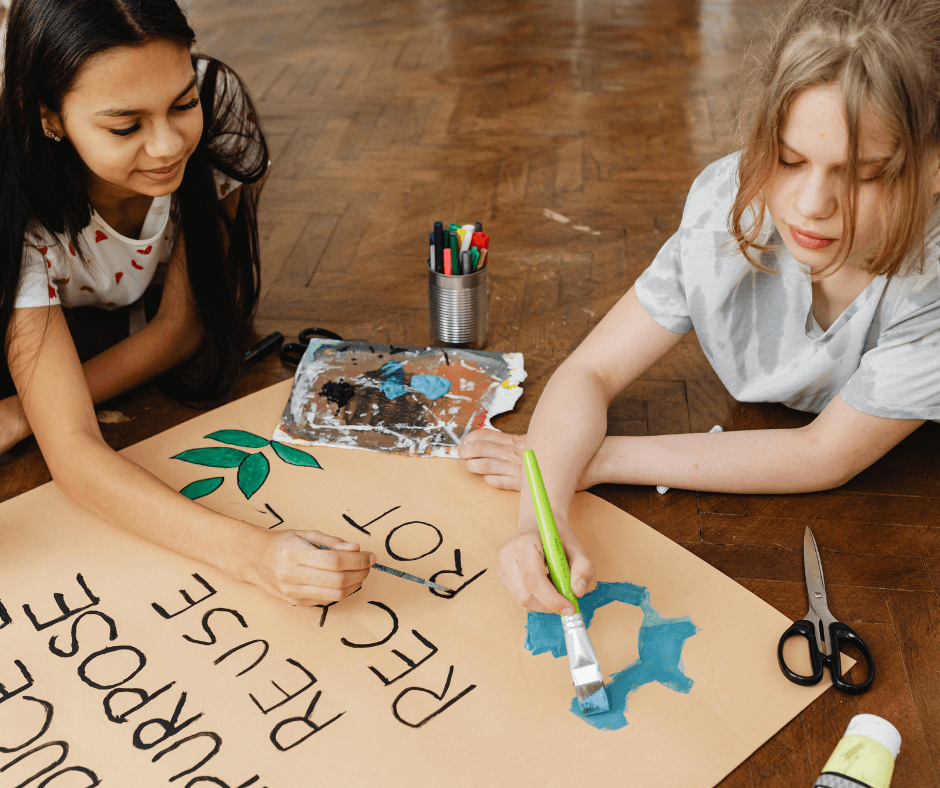
- Create a Campaign: Design a campaign to raise awareness about plastic pollution. This could include posters, videos, blog posts, or a social media plan to encourage others to reduce their plastic use.
- Write to a Brand or Politician: Encourage children to write persuasive letters to a company or local politician, urging them to reduce plastic packaging or support stronger environmental policies.
- Host a Debate: Split into teams and debate a question like “Should single-use plastic be banned?” Encourage evidence-based arguments using real-world examples and impacts.
Useful Link: Writing Activities for Earth Day via Subject to Climate
Children Aged 15+ Years
This is when discovering personal values and thinking more deeply about the world around them kicks into place. Debating ideas, testing boundaries, and finding ways to make a real difference in causes they care about often become important.
How To Talk About Plastic Pollution:
- Be straightforward and respectful, recognising their ability to understand complex issues: “Plastic pollution is a major environmental crisis affecting ecosystems worldwide. By actively reducing your reliance on single-use plastics and choosing sustainable alternatives, you can contribute to meaningful change.”
- Connect their actions to global effects and social responsibility: “Every piece of plastic avoided helps reduce the harmful impact on marine life, supports efforts to combat climate change, and lessens the burden on vulnerable communities disproportionately affected by pollution.”
- Encourage leadership and advocacy: “Consider how you can lead by example—whether by organising awareness campaigns, influencing policies, or encouraging your peers and community to adopt plastic-free habits that make a real difference.”
Books To Read:
- Taking on the Plastics Crisis by Hannah Testa
- How to Avoid Microplastics by Bart Green
- The Past Is Red by Catherynne M. Valente
Activities To Try:
- Host a Documentary Screening and Discussion: Watch a film such as The Story of Plastic or A Plastic Ocean. Follow with a group discussion, journaling session, or debate exploring the causes and impacts of plastic pollution.
- Investigate Greenwashing: Research companies that claim to be “eco-friendly” but still rely on plastic-heavy practices. Create a presentation or short report explaining what genuine sustainability looks like and how to spot misleading claims.
- Organise or Join a Clean-Up: Take part in a local beach, river, or street clean-up. Pair the activity with social media documentation, a tally of the items collected, and a reflection on the most common types of plastic waste found.
Useful Link: Toolkit for Young Climate Activists via UNICEF
As an extra step for each age group, introduce eco-swaps of everyday commonly used items, such as replacing plastic straws with reusable ones, cling film with beeswax wraps, or single-use bottles with refillable alternatives. For younger children, keep swaps simple and guided by adults—for example, using wooden toys instead of plastic ones or reusable snack pots instead of plastic bags.
For older children and teenagers, encourage them to identify plastic-heavy items and choose realistic alternatives, such as switching to a bamboo toothbrush, using bar soap instead of bottled shower gel, or bringing a reusable cup to school. These swaps help make reducing plastic more personal and practical, turning awareness into action in ways that are appropriate for each age group.
In Summary
Hopefully, what you’ve read here has made talking to children about plastic pollution a little easier. Teaching about this key environmental issue can begin with something as simple as a story, a question, or a shared moment of curiosity. Whether it’s chatting with a toddler or exploring deeper ideas with a teenager, there’s always a way to make the topic feel meaningful, age-appropriate, and even hopeful.
If we meet children where they are, use language and activities that spark interest, and let their natural sense of wonder guide the conversation, we can make things both accessible and engaging. By keeping the dialogue going, we can show them that caring for the planet is something they can be part of, right now, in their own way.
It’s their future. Let’s prepare them for it.
What fun activities do you use to teach children about reducing plastic waste? How are are you teaching them about sustainability?
Further Info:
10 Worst Single-Use Plastics and Eco-Friendly Alternatives – WWF Australia
7 Climate Change Hands-On Activities to Keep Kids Engaged – Subject to Climate
 transatlantic | notes
Great, actionable suggestions. Thanks, Molly!
You’re most welcome; thanks for reading!
Another helpful post Molly! I love that you’ve included book recommendations to help educate children.
I think children can be pretty tuned in to environmental issues, so it’s great to facilitate that with books and activities whenever we can! Thanks for stopping by!
As a teenager, our daughter is more switched on to plastic waste than we are, although these tips are fab for younger children. We do recycle as much as possible at home. Our recycling is collected every week, and our rubbish once every three weeks, and I’m very proud to have got the rubbish down to just one black back now!
Reducing your household waste to one black bag is amazing! I think a lot of people don’t realise just how much they can actually do in this way. Thank goodness a lot of younger people are very much aware of this!
This is such a wonderful post with many useful tips. As we live in Sligo, beside the Atlantic Ocean, we often talk about plastic pollution, its effects on marine life and ecosystems, and the importance of recycling. We also make regular trips to the nearby beach where we get involved in beach cleanups. I think we have to lead by example with parents, teachers, and caregivers all modelling sustainable behaviours and encouraging children to participate in reducing plastic waste. Thanks for sharing, and have a good day 🙂 Aiva xx
It’s so great that you participate in beach clean ups, places that are often at the forefront of the impacts of plastic pollution. I agree also that we need to lead by example, show up, help out, and keep it going. Thanks so much for reading!
🥰🥰🥰
love this! My son is very waste conscious and loves helping to recycle, reduce waste and live a more Eco-Conscious life. These are great ways to involve kids!
It’s so great to hear your son is so eco-minded! That is exactly what we need more of to help protect the planet.
My nephew who is 6 years old is drafting his ideas to save the world. I shall share this post with him. I’m sure he’ll like your ideas.
He sounds amazing, and I am sure he will have some great ideas! We need more children and young people like him in the world.
Thank you for sharing such meaningful ways to involve kids in taking care of nature.
I appreciate you stopping by to read this; thank you!
This is such a great and accessible way to help kids understand the importance of reducing plastic waste! Thanks for sharing all of these great tips!
Thank you! Kids are so open to learning things like this, it’s great to be able to share lots of resources to help them.
What a great post!! This is such an important topic and you’ve broken it down into clear steps and angles to approach it. There’s so much to explain and I think this is super helpful for anyone trying to teach our new generations to take care of the environment. Thanks for sharing!
I think the topic of climate change or how to protect the planet (and why) can seem a bit scary when trying to involve children. Hopefully, this will help make it a bit easier!
These are such great tips! My son loves helping us sort the recycling!
It’s wonderful to hear that he likes doing that, and that he can get involved!
So many great ideas. Thanks for sharing.
I appreciate it; thanks for stopping by!
It is important to teach children about the impact plastic has on the environment and ways they can reduce plastic waste. I love that you broke down the different age groups and included books and activities for them. I will definitely have to look into some of the books for my daughter!
It can be a bit overwhelming sometimes to know how to talk/educate about climate change to children (depending on their age), so I hope this helps!
This is wonderful! It’s so important to talk and educate others about plastic waste, especially kids. These activities sound fun and will inspire so many to be aware of how they can make impactful changes.
I hope this will prove useful to anyone looking to educate children on the importance of reducing plastic. Thanks so much for reading!