
Explore the importance of collective climate action and how individuals, communities, and governments can join forces to drive real change for the planet.
No one can tackle the climate crisis on their own—it takes all of us pulling in the same direction. That means making eco-friendly choices at home, communities rolling out local solutions, governments stepping up with strong policies, and countries working together through global agreements and partnerships. When all these efforts link up, they create a momentum for change that’s far stronger than anything we could achieve alone.
While individual choices matter, they aren’t enough to solve the climate crisis. Small steps like recycling, eating less meat, or driving less do help, but the scale of the problem goes far beyond what lifestyle changes can achieve. Most global emissions come from big industries, energy systems, and policies shaped by governments and corporations. Without systemic shifts—like switching to renewable energy, regulating polluters, and redesigning infrastructure—personal efforts risk being little more than drops in the ocean. That’s why individual action is most powerful when it’s paired with collective pressure and large-scale reform.
Working towards a greener future in this way shows its power at every level. Take the Montreal Protocol, for example—it brought countries together to cut ozone-depleting gases, avoiding billions of tonnes of CO₂-equivalent emissions. In Heidelberg, Germany, the Bahnstadt district shows how communities can slash energy use through smart, sustainable design. On the corporate side, the RE100 initiative unites over 400 companies in committing to 100% renewable electricity. These examples prove that coordinated efforts—from global treaties to local projects and corporate pledges—can drive real change.
And when we contribute by making our own eco-friendly choices and speaking up about living sustainably, we join a larger movement, multiplying the impact and encouraging others to take action.
This post is part of the Climate Change Collective, a dedicated group of bloggers that tackle environmental and climate-related issues. The lead topic this month, ’Celebrating Three Years of Climate Change Awareness and Environmental Education’ was written by Michelle from Boomer Eco Crusader.
Why You Should Focus on Collective Climate Action
When global, national, local, and individual environmental efforts work together, they can achieve incredible results. Personal choices to live more sustainably definitely matter, but they can only take us so far. When these choices are combined with the efforts of communities, organisations, and government policies aimed at the same goals, they become part of a bigger system of structural change that can tackle climate challenges in a broader, more transformative way.
Another reason collective action is so important is that it creates accountability and momentum. Governments and large institutions are more likely to adopt solutions that cut emissions when they see widespread public support. Community projects—like local climate networks or zero-waste campaigns—can inspire individuals to join in and feel part of something bigger. Corporate commitments, such as joining renewable energy coalitions, often happen in response to pressure from consumers, investors, and advocacy groups. In short, real change usually comes from many smaller voices acting together.
Finally, collective action builds resilience and shared learning. When people, communities, and organisations work together, they can pool resources, knowledge, and ideas to find smarter, more effective solutions. Successful collaborations—whether international treaties, city-wide climate programmes, or corporate sustainability initiatives—show that protecting our planet is more efficient and innovative when no one acts alone. Put simply, unified climate action not only increases the scale of impact but also strengthens the networks that make lasting change possible.
The future of life on earth depends on our ability to take action. | Sir David Attenborough, British Writer, Broadcaster and Naturalist
How To Put Collective Climate Action Into Practice
For those of us who care about protecting our planet and want to help secure a greener future, supporting key climate actions that truly make a difference is incredibly important. We can’t solve every problem global warming creates, but we can make sure the choices we take and the causes we back add up to meaningful progress and help build real momentum.
To have the greatest impact, climate action needs to build a collaborative framework across five key areas—where progress in one strengthens and amplifies progress in the others. Here’s how:
Individual Sustainable Choices
Small, everyday changes—like reducing household waste, conserving energy, switching to renewable suppliers, choosing eco-friendly products, cutting down on single-use plastics, using sustainable transport, or supporting ethical brands—all help drive progress.
These choices go even further when they’re visible and shared—talking about the lifestyle changes we’re making can influence friends, family, colleagues, and even social media followers. Getting involved in campaigns, adding our voice to petitions, or contributing to climate-focused organisations can help strengthen movements that drive real change.
Community Eco-Friendly Action
Communities have the power to spark change from the ground up. Getting involved in local initiatives—like community gardens, repair cafés, clean-up drives, or energy co-ops—can reduce emissions and build resilience. Campaigns for safer cycling routes, tree planting, or sustainable transport send a clear message to councils and policymakers that people want greener infrastructure.
These projects also foster connection and motivation, reminding us that climate action is something we do together, not alone. To take part, we could start by finding local groups or events in our area. Volunteer our time or skills, and encourage friends and neighbours to join. Even small contributions—like sharing information about a local eco-project—can make a real difference.
Government (Local and National) Environmental Strategies
Systemic change relies on strong national policies. Governments can set binding emissions targets, invest in renewable energy, regulate polluting industries, and fund projects that help communities adapt to climate impacts.
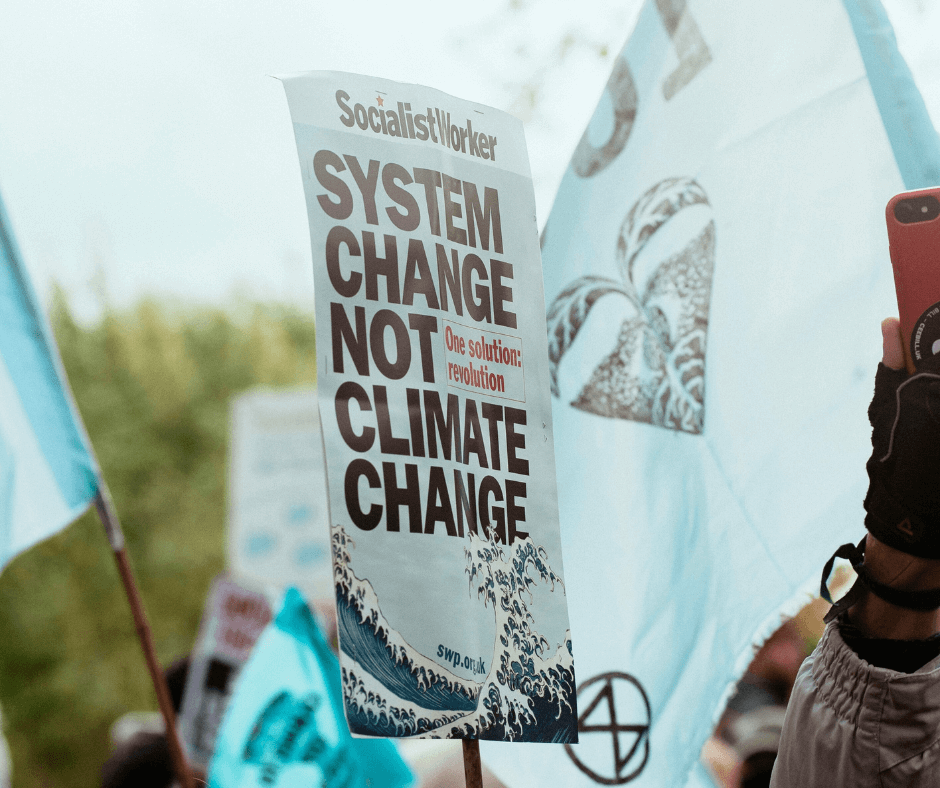
As citizens, we can hold leaders accountable by voting for climate-conscious representatives, writing to elected officials to express our concerns and demand action, joining demonstrations, and backing watchdog organisations that scrutinise climate policy. The louder and more consistent the call for ambitious legislation, the harder it is for governments to ignore.
Global Partnerships for Climate Action
No nation is immune to climate change, so global cooperation is key. Agreements like the Paris Accord show that when nations work together, they can protect the planet on a huge scale. We can all play a part by keeping up with global climate news, sharing what we learn, and supporting communities hit hardest by climate impacts. International campaigns—like divestment movements and youth climate strikes—also put pressure on governments and corporations, showing that the world is watching.
To get involved, we can connect with international climate organisations, sign global petitions, join virtual events, or collaborate with groups that link local action to worldwide campaigns. Taking part across borders reinforces the message that climate justice is a shared responsibility.
Building Inclusive and Equitable Climate Solutions
Equally important is making sure our climate efforts are guided by justice. This means recognising and prioritising the needs of communities most affected by climate change and extractive practices—often groups that have been historically marginalised—so they are supported, heard, and central to decision-making. It also means respecting Indigenous rights and knowledge: supporting access to land, valuing traditional ecological practices, and backing their efforts to protect territories and ecosystems. True collective climate action isn’t just about cutting emissions; it’s about building a fair, inclusive movement that safeguards both people and the planet.
To take part, we can listen to and amplify voices from frontline communities, support Indigenous-led initiatives, and choose to back policies or organisations that put justice and equity at the heart of climate solutions.
How can we take action and work together if everyone is not equally informed about what is happening? The only way to do this is to make sure that everyone gets an empowering and relevant climate and ecological education […]. | Mitzi Jonelle Tan, Filipino Climate Justice Activist

Outstanding Climate Action Groups You Need To Follow
Supporting the work of these groups is a powerful way to learn more about the actions we can take as individuals—and how to advocate for or support accountability and progress at local, national, and global levels:
- Climate Action Network brings together more than 1,900 civil society organisations across over 130 countries to drive coordinated, sustainable action that tackles the climate crisis while promoting social justice.
- Friends of the Earth International unites millions of supporters across 70 national organisations, making it the world’s leading grassroots environmental movement. Their goal is to build a global society where equity, human rights, and environmental sustainability are fully realised.
- Climate Justice Alliance is a U.S.-based group of grassroots organisations working to build a transformative climate justice movement. It focuses on community-led solutions and pushes for policies that tackle the root causes of climate change.
- Green Belt Movement, an Indigenous grassroots organisation in Kenya, empowers women through tree planting. It tackles global deforestation, environmental degradation, and women’s economic empowerment, while advocating for human rights and environmental justice.
- Pacific Climate Warriors highlights the voices and efforts of Pacific Island youth campaigning for climate justice. They organise actions such as blockades and protests to draw attention to how climate change affects their communities.
- Seed Mob is Australia’s first Indigenous youth climate network, led by Aboriginal and Torres Strait Islander young people. They focus on climate justice, protecting sacred lands, and challenging fossil fuel projects while empowering Indigenous voices in environmental activism.
- World’s Youth for Climate Justice is a global movement using legal action to push governments toward stronger climate accountability. The group is asking the International Court of Justice to clarify how states must protect the rights of both current and future generations from the harms caused by climate change.
These are just a few of the many inspiring groups out there. I encourage you to explore organisations in your local area—or across your country—to find ways to get involved and support climate action. Every small contribution adds up, and the more people who take part, the stronger our collective impact becomes.
In Summary
Sometimes tackling global warming and its impacts can feel overwhelming, as if nothing will work or not enough is being done. It’s important not to lose hope, but to channel that sense of urgency into practical actions at home and to support initiatives and policies in our local area that make us feel empowered and effective. We can also join forces with others, turning individual efforts into collective power that pushes governments, businesses, and global institutions to take meaningful, high-priority steps to protect the planet.
Now is the time to connect with local initiatives, support grassroots and Indigenous climate organisations, advocate for policies that cut emissions, and share our efforts to inspire others. Collective climate action is our strongest tool—together, our voices, choices, and actions can shape a fairer, more sustainable future before it’s too late.
What collective actions do you think could make the biggest difference where you live? What’s one thing you could do this month to join forces with others for meaningful climate action?
Further Info:
A Silent Majority of the World’s People Wants Stronger Climate Action – The Guardian
Check out the official Earth Day website for useful information and resources.
 transatlantic | notes
Climate changed awareness is so important. There many unexpected natural disasters happening around the world.
There are so many things going on around the world due to climate change. I hope that people become more aware and active in combatting it.
It’s very often the communities with the least power to effect climate change that are the ones most affected by what other nations and governments do – or don’t do. A really helpful piece, Molly, every little can and does help.
Exactly this … and government officials and other leaders are often slow to act to protect these communities. I hope people can find ways to help and keep climate action going.
There is so much we can do as individuals to combat climate change. I can definitely see why collective climate action is so important to help fight it too x
Exactly right—there is a lot we can get involved with. I hope this post provides any readers a few useful ideas.