The benefits of planting wildflowers go far beyond creating beautiful spaces; they also boost biodiversity, help pollinators, and improve soil health. There are numerous ecologically friendly reasons to support national or local-level projects that champion native wildflowers; we can even grow them in our own gardens!
This post is part of the Climate Change Collective, a group of environmentally-minded bloggers who share valuable climate action news. Started by Michelle from Boomer Eco Crusader and Jamie from Jamie Ad Stories, each month a different member contributes a lead/focus post that the rest of the collective responds to on their own sites, further discussing the information and issues raised.
The collective is currently open to any other bloggers who want to join; if you’re interested, get in touch.
Collective Climate Action
The most recent lead/focus post for the collective was written by Boomer Eco Crusader, where Michelle writes about her experiences participating in a community microforest planting program. It’s here she introduces the history, and eco-friendly potential of these small biodiverse forests in metropolitan and rural areas. It’s an encouraging reminder that there are active roles for us to play in caring for our local environment; something that is especially needed in times when it seems like all the climate news is full of misinformation, alarm and dread. We still need to pay attention to what’s happening to our planet, but it’s also healthy to be aware of all the wonderful initiatives that are doing something practical and positive.
Although microforests alone aren’t a solution to the rapid deforestation we’ve seen across the globe, they offer numerous environmental, social and economic benefits. Think back to your elementary school science class when you learned that trees and plants breathe in carbon dioxide and breathe out oxygen. That’s what makes trees one of our best weapons in the fight against climate change. | Microforests: A Tiny Idea With Big Potential – Boomer Eco Crusader
Michelle’s post got me thinking about other ways in which we can boost biodiversity where we live, which brought to mind a recent news story about a couple living in Vermont, Natalie Gilliard and her husband Jonathan Yacko, who decided to transform their yard into a wildflower meadow. Even though most of us won’t be able to do something on this scale; planting wildflowers to create beautiful spaces and support pollinators, species diversity, and the local environment is a project we can get behind.
What Are Wildflowers; and Why Are They So Important?
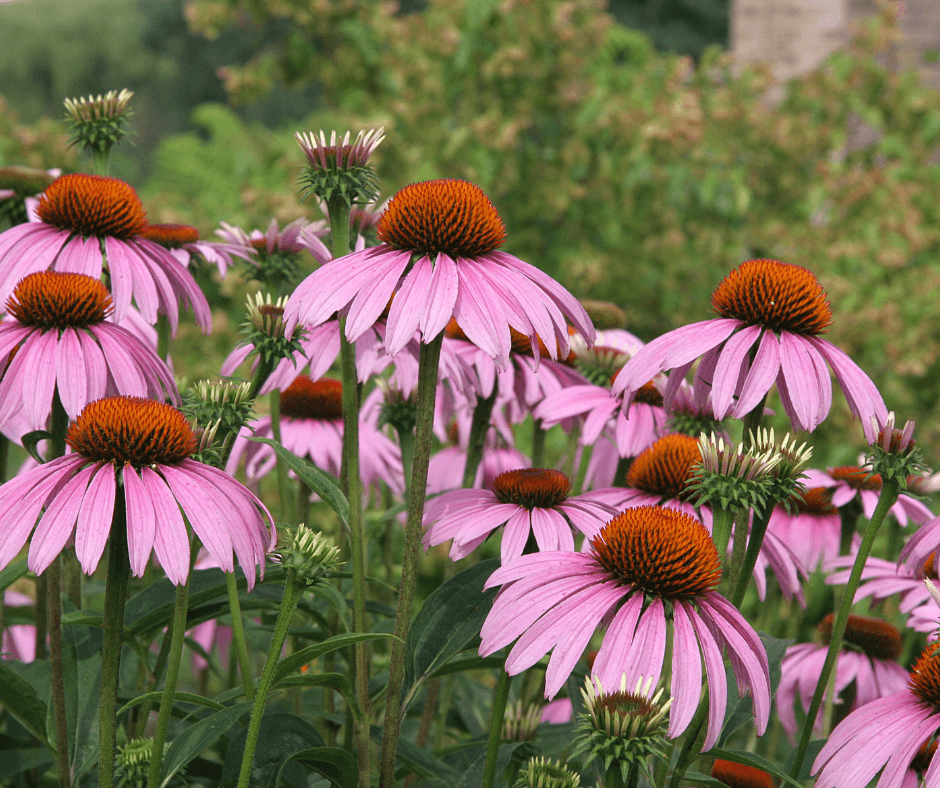
Whether it’s a vibrant echinacea purpurea (purple coneflower), delicate allium cernuum (nodding onion), or any other variety; the wildflowers that are native to where we live carry out an important role within local environments.
Wildflowers are vibrant, untamed botanical treasures that come in a diverse array of species, colours, and shapes. Typically thriving without human cultivation, this hardy flora can adapt and survive in harsh conditions. Flourishing within meadows, woodlands, alpine slopes, green metropolitan areas, and even deserts; wildflowers play an essential role in local ecosystems, providing food and habitat for wildlife as well as painting landscapes with their unique beauty.

The Wonderful Ecological Benefits of Wildflowers
The value that wildflowers introduce to an area should not be underestimated. Aside from their natural allure, they provide a significant ecological boost to the spaces they grow in. While they beautify, they also:
- Support pollinators, like bees and butterflies, by supplying essential food sources of nectar and pollen and a habitat to find shelter, rest and encourage breeding.
- Enhance soil health by nurturing microbial diversity, stabilising soil structure with their roots, and increasing organic matter (which boosts nutrient cycling and water retention, promoting overall ecosystem vitality for other plants to grow).
- Contribute to erosion control as their roots hold soil in place during heavy rains or winds, preventing it from being washed away. This can be particularly crucial when managing erosion on hillsides and other unstable landscapes.
- Participate in carbon sequestration as they capture and store carbon dioxide from the atmosphere, aiding in mitigating climate change by reducing greenhouse gas concentrations.
- Improve water quality as wildflower meadows act as natural filters, trapping pollutants and reducing runoff into streams and rivers, thus improving water quality for aquatic ecosystems.
Most varieties of wildflowers require less maintenance than cultivated plants because they are native to their regions and have adapted to local conditions. This built-in natural resiliency reduces the need for water, fertiliser, pesticides, and mowing (which is better for both environmental and human health). Their ability to attract pollinators, for example, that eat unwanted bugs, eliminates the need for expensive or harmful pest control measures. Wildflowers are also self-seeding, which means they perpetuate their populations without the need for replanting each year and can typically thrive in nutrient-poor soils (while also helping to enhance soil health, as previously mentioned) — wildflowers are all about sustainability.
It seems to me that the natural world is the greatest source of excitement; the greatest source of visual beauty, the greatest source of intellectual interest. It is the greatest source of so much in life that makes life worth living. | Sir David Attenborough

How To Encourage Growing Wildflowers Where You Live
Supporting the planting of wildflowers in your local area is a great way to get directly involved and promote community-based climate action that enhances biodiversity and develops a more natural, beautiful environment. Here are some steps you can take to support the wildflowers where you live:
- Add a Wildflower Area to Your Garden: You don’t have to go as far as making a wildflower meadow (unless, of course, you want to), but one specific area can be turned into a wildflower haven. It’s not as simple as just sprinkling some seeds; it will require research and preparation, but with some careful thought and planning, you can grow wildflowers in your garden.
- Encourage Educational Projects: Whether it’s at local schools or colleges, recommend that pupils learn about native wildflowers and how to protect them.
- Go on Wildflower Walks: Find guided field trips offered by local parks or wildlife groups that take you to areas where wildflowers grow and teach you about their conservation.
- Support Local Wildlife Organisations: Find community groups to volunteer with and/or donate to that have strategies to grow and preserve wildflowers.
- Find Local Government Initiatives: Some authorities overseeing land management or municipalities may have schemes to introduce and preserve wildflowers. Find out if local roadside verges, parks, general grassy areas, and district decorations (like hanging baskets and permanent planters) are being used to grow native wildflowers. If they aren’t, contact your government representative and recommend this idea.
- Advocate for Wildflower Meadows: Join a group or contact community leaders that are looking to turn an underused or overlooked area into a wildflower meadow. Donate time and money (or land, if you have it) to anything like this. Schools and other campuses can also be encouraged to create on-site meadows.
- Help Promote Seed Projects: With a quick search online, you’ll likely be able to find stores or organisations that sell or give out free wildflower seeds. They often have great educational information about what types of plants are appropriate for your locality and how to grow them effectively. Use your social media or friend groups to spread awareness about these resources. Important Note: Make sure the seeds you get do not contain invasive species that may harm your local environment.
In Summary
Similar to planting trees in microforests, supporting the growth and conservation of wildflowers isn’t a fix-it-all solution to the increasingly destructive climate change we’re seeing unfold in front of our eyes — but it is one essential element of a multifactorial approach that becomes part of a wider effort that does make a difference.
Wildflower species are found across the globe, and they contribute to the beauty and health of the places we live in. Absolutely everything is connected, and while it can feel at times like not enough is being done, find solace in creating spaces for something restorative to bloom. Be a champion for planting things that do good for the planet and for our souls. Wildflowers are an essential part of the natural world; cherish them.
What wildflower species are common where you live? What are you planting to help the planet?
Further Info:
When and How to Plant Wildflower Seeds to Rewild Your Yard – Better Homes & Gardens
Wildflowers Around the World – Flora Queen
 transatlantic | notes
I love this! I feel like it’s easy to take for granted something delicate and small like a wildflower, but as you lay out here, they are actually so important to our planet. And the bonus is they are beautiful. I absolutely love wildflowers 🙂
I agree! It seems like wildflowers are often overlooked, but they truly are beneficial and so beautiful. A double whammy of goodness!
What a wonderful post, Molly. One of my “60 before 60” goals is to plant a pollinator’s garden. You’ve given me some things to think about!
That is a fantastic goal to have! I love going to wildflower meadows and seeing gardens like this, they just seem to be so beautiful!
Yes, this is right up my alley. I would encourage anyone who doesn’t know where to start to see if there’s a seed library initiative nearby. They’re usually run by friendly volunteers who are passionate about sustainable gardening and will answer all your questions.
If you can’t find anything locally, see if you can find something online. Seeds are easy and affordable to ship. But try to keep it within your own state/region/USDA zone in order to get more native or naturalized seeds.
Exactly, with a simple online search you can find seed projects locally and even find ones selling region specific seed collections. It’s a great way to re-wild an area that needs a bit of a boost!
I’m a huge fan of wildflowers. They do well in poor soil, look wonderful, are great for pollinators, and need zero maintenance apart from deadheading. We grow wildflowers such as borage, vipers bugloss, malva, cornflowers, coreopsis and more in every single spare pot or patch in our garden and they’ve been giving us joy for months at a time. Lovely post, thank you, Molly.
It is so great to hear that you grow so many varieties, they must really be beautiful and uplifting to look at!
Thanks for the reminder…nature will deliver beautiful imagery if we just help a bit!
It’s amazing how much we can actually do for this; I hope more wildflowers get planted!
There are amazing benefits of planting wildflowers, especially for the bees x
Lucy
100%! Bees and other pollinators are so important so it’s great to make space for them with some beautiful wildflowers!
I loved reading this! There are so many benefits to planting wildflowers, plus they are so beautiful and colorful! Thanks for sharing the importance of them! 🙂
Wildflowers really are such an uplifting presence in any area; hopefully more people will get behind planting them and supporting their use in their local area!
I have seen other bloggers sharing helpful tips and sharing knowledge on how we can help the planet. This was really interesting, so many lovely benefits. Thank you for sharing.
Lauren
It’s good to see that more and more people are sharing environmental news. I think there is so much good being done that it’s helpful to be reminded of this. Thanks for reading!
Such a lovely post! I don’t know anything about wildflowers and their benefits to the environment so this was so enlightening for me. I don’t have a green thumb, but I’ll try to do my share by planting wildflowers. Thanks for the excellent reminder!
Another great thing about wildflowers is that they don’t require as much gardening ability to thrive; so they are perfect if you don’t have a green thumb!
Amazing post Molly! I learned so much and I’m looking forward to diving into what’s going on in my community and ways we can support local wildlife organizations. Thank you for sharing!
It’s great that you’re going to look into this, there are often more community-based wildflower projects than people realize!
I had no idea there were so many benefits to wildflowers, friend! Thank you so much for sharing those as well as just an environmental background on them!!
I hope you have a fantastic weekend! 🙂
Wildflowers a so essential, so it was great to be able to share a little bit more about them. Thanks for reading!
I love looking at wild flowers. They are some beautiful and magical.
Me too! All the different varieties are always great to look at!
You have made important points about wildflowers. I shall have to make sure we teach about them at my school. I think trees and wildflowers can make a massive difference to carbon capture.
I hope more schools teach about wildflowers, and even make space for them if they have green spaces available to plant some. It would make a great project!
Ooooh! I love the idea of plating wildflowers, especially when I don’t have to go on a 90mi drive to see them! Even better when it helps the environment. Biggest of them all, I just love that honeybees can produce honey with different hints of the flowers they visited. Love this! Thanks for sharing!
Wildflowers have so many benefits that I hope planting them becomes more popular. They are beautiful, and help the environment, a definite win-win!
LOVE this! A wildflower meadow or even just a border is my absolute favourite thing to see.
Me too! It really seems to lift my spirits when I see them.
I love wildflowers and even have some growing in the courtyard (paved garden). They brighten my garden and the bees love them. Win Win. Thanks for sharing, I’ll put some in the front garden next year.
I love that you have some wildflowers in your courtyard, I bet the bees absolutely love them!
I love wildflowers! We planted some in our front garden this year and they looked lovely when they were in bloom!
Corinne x
It’s so great you have some planted in your front garden, it will be a great habitat for so many essential insects!
I feel guilty. You’ve taught me something that I took for granted in school. It’s important to be environmentally conscious and I plan to lookout for these wildflowers and be aware. Great informative but easily digestible post.
Definitely don’t guilty; you can now appreciate all the wildflowers you see!
So many benefits to planting wildflowers! Plus, they are so pretty too! Thanks so much for sharing!
It’s amazing how useful they are; I love spotting them out and about!
There are so many wonderful benefits to wildflowers. I’ve been planning to add some wildflowers to my garden to help attract more pollinators. Plus I hate having a lawn, so replacing that with wildflowers would be amazing.
I think having a wildflower meadow instead of a lawn would be so wonderful; I’d love to do that too!
I absolutely adore wildflowers, I think they’re so beautiful. Definitely something I want to plant in my garden next year.
I think so too, they really are so beautiful to look at, especially knowing they do so much good for the environment!
Wow! I never knew there were so many benefits to wildflowers. They are now on my radar and they are so pretty too. Thank you for sharing this!
They are such a lovely addition to any area; I’m so glad this helped you appreciate them!
I thought Michelle’s post was insightful as I haven’t heard about microforests before. I completely agree with you that wildflowers are so important, and it was informative to read about all the benefits. Also, your advice on how to support wildflowers is helpful too!
I loved Michelle’s post and it really goes to show that action can be taken on a community level—which is so important!
Wildflowers are so pretty, I am not sure if there are any wildflower projects near me, but I am going to have a look x
I hope you find some as they really do brighten an area!
Wow, this is something new for me. Love wildflowers. Knowing the benefits is even better.
Wildflowers are so wonderful, hopefully more places make good use of them!